
Launch of the Autonomy Under Law Project: Legal Guardrails for AI
Building empirical evidence for the governance of autonomous AI systems
Nooriam is pleased to announce the launch of Autonomy Under Law: Legal Guardrails for AI Project, a collaborative research initiative that will generate empirical evidence on whether Australian-built techno-legal infrastructure can reduce the harms caused by autonomous AI systems.
Officially launched on 3 September 2026 at UWA's Business School, the project brings together a consortium of scientists, engineers, and legal experts from the UWA Data Institute, Nooriam, LexChip, The University of Western Australia, Curtin University, the Pawsey Supercomputing Research Centre, Stirling & Rose, and Murdoch University. The NSW Police Force, the WA Police Force and the Australian Society for Computers and Law are formal observers to the Project.
Why this project matters
Autonomous AI systems are proliferating across every industry, yet effective governance remains an unsolved global problem and a major threat to the Australian economy, and beyond.
The Project responds to the widening gap between the rapid deployment of agentic AI (being systems capable of autonomous decision-making and action) and the development of governance frameworks capable of holding those systems accountable at law. Existing regulatory approaches, largely designed for static software tools, are ill-suited to the dynamic, adaptive behaviour of autonomous AI agents.
The experiment: supercomputing simulations with legal guardrails
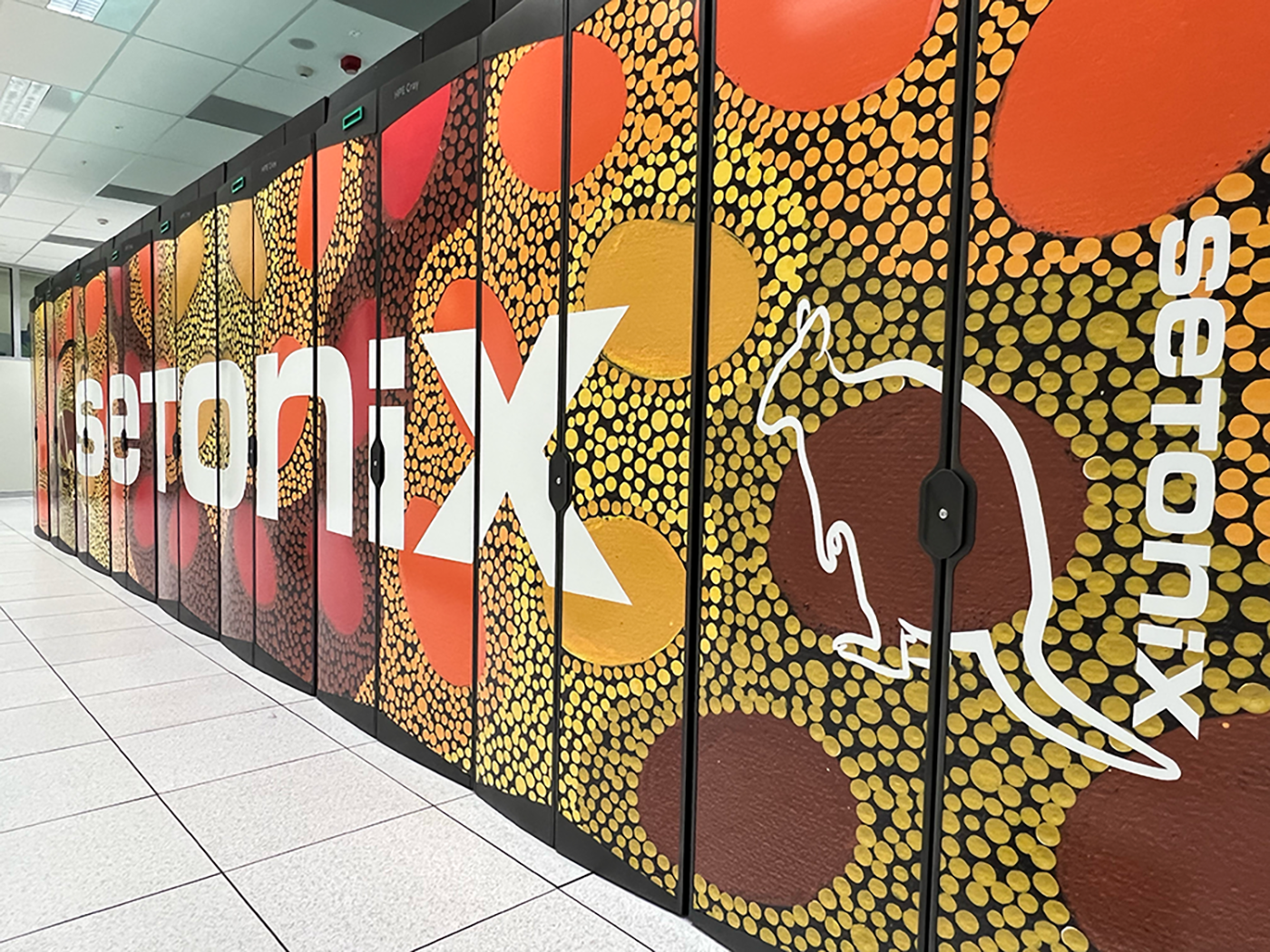
The core of the Project is a four-month program of extensive simulation testing conducted on the Pawsey Supercomputing Research Centre's infrastructure: the Setonix, a Tier 1 supercomputer. The consortium will run simulations to compare AI agents operating with a novel legal harness architecture developed by Nooriam; a techno-legal layer that continuously evaluates and binds an AI agent's actions against a framework of legal rules and principles, against AI agents operating without any legal guardrails.
The Project will measure whether the legal harness architecture can reduce agent harms.
Further, by having AI agents being bound within the law, the Project aims to ensure that economic benefits from AI agents can be fully realised.
Informing policy, benefiting enterprise
The results of the simulations will be published in a joint technical report to be shared directly with government and industry. The Project's findings are intended to inform AI governance policy at both state and national levels in Australia, and to provide evidence-based insights of practical benefit to enterprises, regulators, and policymakers worldwide.